

The new financial year brings important super changes, a mixed year for markets and continued pressure on interest rates. Here is our summary.
Key Changes from 1 July 2026
- An additional 15% tax applies to superannuation balances above $3 million.
- The transfer balance cap for new pension accounts has increased to $2.1 million.
- The concessional (tax-deductible) contributions cap has increased to $32,500.
- The non-concessional contributions cap has increased to $130,000.
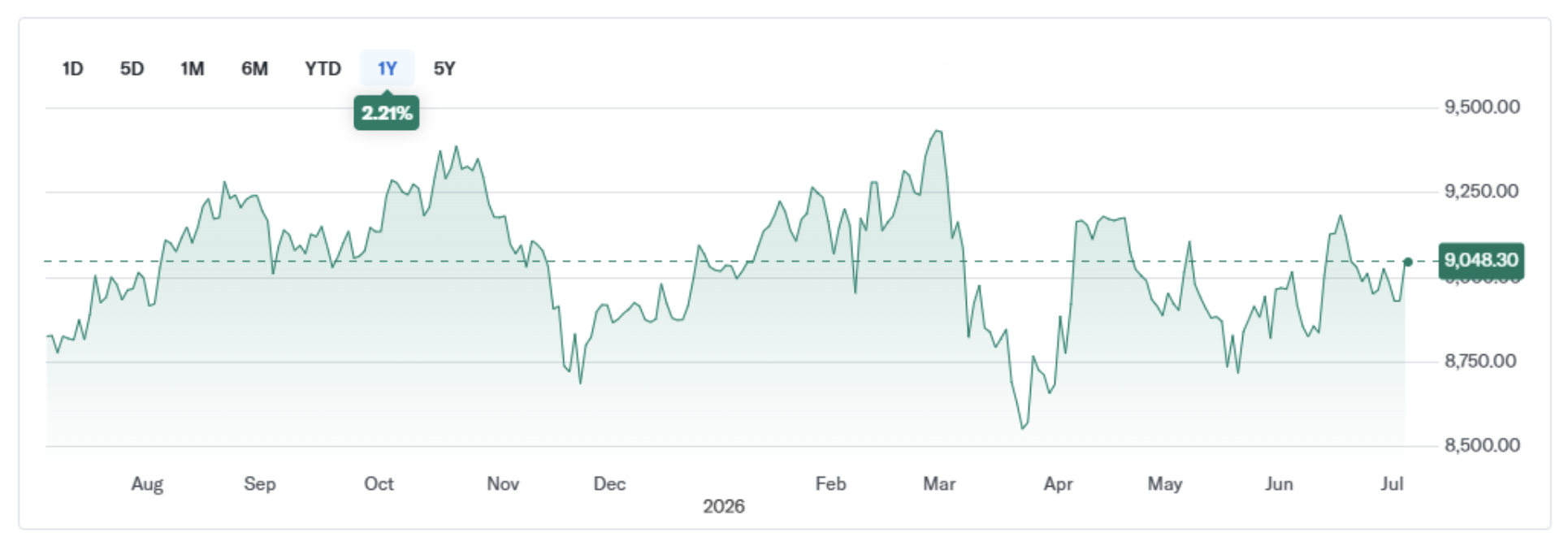
All Ordinaries Index: 12 Months to 1 July 2026
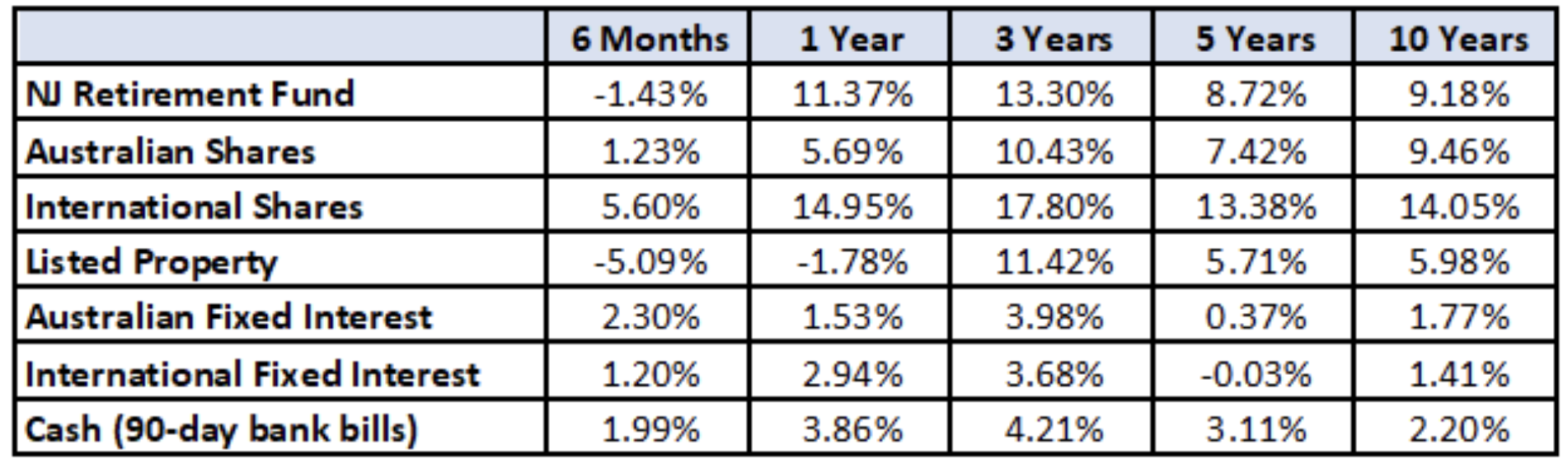
Market Returns to 30 June 2026
Past performance is not a reliable indicator of future performance.
Market Commentary
It has been a volatile year for investment markets, with two significant falls as the conflict in Iran raised concern. Real estate and fixed interest (government bonds) performed poorly due to pressure on interest rates.
Despite this, most investors ended the year with a reasonable return, driven by strong international shares. International shares have been the best-performing asset class over every time period for the last 10 years.
US companies make up 73.8% of the international shares index, and all of the ten largest global companies are US-based, so the index depends heavily on these companies. A meaningful exposure to international shares remains important, but so does diversification, as this trend could reverse.
We continue to look for ways to manage risk and keep returns as consistent as possible over time.
Australian Economy
High oil prices over the last three months have created a supply shock. The temporary cut to fuel excise absorbed part of it, but the excise is due to return to normal in August. With the Strait of Hormuz reported to be open again, oil prices have eased and are now around 10% above their level of 6–12 months ago.
CPI inflation is 4.0% and may not fall much in the near term, keeping pressure on the Reserve Bank to raise interest rates. Unemployment is 4.4% and GDP growth is 2.5%, indicating a relatively stable economy, though this can change quickly.
Changes to capital gains tax, negative gearing and SMSF rules have made property investment less attractive. Fewer investors are buying, auction clearance rates have fallen and prices are declining. This may improve access for first home buyers, but its effectiveness is yet to be seen. Rules may change again, though for most people the impact is likely to be small.
US Economy
US inflation is 4.2%, economic growth is 2.1% and unemployment is 4.2%, all similar to Australia. The key difference is the official interest rate: 3.50%–3.75% in the US, compared with 4.35% here.
Large investment in AI systems and data centres has supported the US economy, though this is likely to slow at some point. Hosting the FIFA World Cup may also provide a boost to tourism.
The main risks are political instability and a large budget deficit. The budget will eventually need to return to surplus, but the current political environment makes this difficult.
Is It Time to Review Your Portfolio?
We contact clients proactively when we believe a review is needed. If you would like a review sooner, contact us or call (02) 8267 2800 to book a time.
This article contains general information only and does not take into account your objectives, financial situation or needs. Consider whether it is appropriate for you and seek personal advice before acting. Figures are as at 30 June 2026 unless stated.